Saturday, 22 January 2011

hill rebel officer

one of the best models they did.a rare piece. below are some more acw soldiers but are they hill?

Saturday, 11 December 2010

Thursday, 9 December 2010

bren gun

The Bren, usually called the Bren Gun, was a series of light machine guns adopted by Britain in the 1930s and used in various roles until 1991. While best known for its role as the British and Commonwealth forces' primary infantry light machine gun (LMG) in World War II, it was also used in the Korean War and saw service throughout the latter half of the 20th century, including the 1982 Falklands War and the 1991 Gulf War. Although fitted with a bipod, it could also be mounted on a tripod or vehicle-mounted.


The Bren was a modified version of a Czechoslovak-designed light machine gun, the ZB vz. 26, which British Army officials had tested during a firearms service competition in the 1930s. The later Bren featured a distinctive curved box magazine, conical flash hider and quick change barrel. The name Bren was derived from Brno, the Czechoslovak city where the Zb vz. 26 was originally designed, and Enfield, site of the British Royal Small Arms Factory.


In the 1950s the Bren was rebarrelled to accept the 7.62x51mm NATO cartridge. It was replaced in the British Army as the section LMG by the L7 general purpose machine gun (GPMG), a heavier belt-fed weapon. This was in turn supplemented in the 1980s by the L86 Light Support Weapon firing the 5.56x45mm NATO round, leaving the Bren in use only as a pintle mount on some vehicles.


The Bren is still sold by Indian Ordnance Factories as the "Gun, Machine 7.62mm 1B".

Saturday, 27 November 2010

new ww2 figure

Ive never ever seen this figure before so its nice to find a new Hill figure. Is it 54mm or bigger though and is it ww1 or 2?

Wednesday, 24 November 2010

sepoys

The Indian Rebellion of 1857 is also known as India's First War of Independence, the Great Rebellion, the Indian Mutiny, the Revolt of 1857, the Uprising of 1857, the Sepoy Rebellion and the Sepoy Mutiny. It began as a mutiny of native soldiers sepoys employed by the British East India Company's army, against perceived race-based injustices and inequities, on 10 May 1857, in the town of Meerut, and soon erupted into other mutinies and civilian rebellions which were mainly centered on north central India along the several major river valleys draining the south face of the Himalayas See red annotated locations on Map at right but with local episodes extending both northwest to Peshawar on the north-west frontier with Afghanistan and southeast beyond Delhi.


The main conflict occurred largely in the upper Gangetic plain and central India, with the major hostilities confined to present-day Uttar Pradesh, Bihar, northern Madhya Pradesh, and the Delhi region. The rebellion posed a considerable threat to British East Indian Company power in that region, and it was contained only with the fall of Gwalior on 20 June 1858. In some regions, such as Oudh, the rebellion took on the attributes of a patriotic revolt against European presence. Rebel leaders, such as the Rani of Jhansi, became folk heroes in the nationalist movement in India half a century later, The rebellion led to the dissolution of the East India Company in 1858, and forced the British to reorganize the army, the financial system, and the administration in India. India was thereafter directly governed by the Crown in the new British Raj. This was achieved either by subsidiary alliances between the Company and local rulers or by direct military annexation. The subsidiary alliances created the Princely States or Native States of the Hindu maharajas and the Muslim nawabs. Punjab, North-West Frontier Province, and Kashmir were annexed after the Second Anglo-Sikh War in 1849; however, Kashmir was immediately sold under the Treaty of Amritsar 1850 to the Dogra Dynasty of Jammu and thereby became a princely state. The border dispute between Nepal and British India, which sharpened after 1801, had caused the Anglo-Nepalese War of 1814–16 and brought the Gurkhas under British influence. In 1854, Berar was annexed, and the state of Oudh was added two years later. For practical purposes, the Company was the government of vast region of India.


Tuesday, 23 November 2010

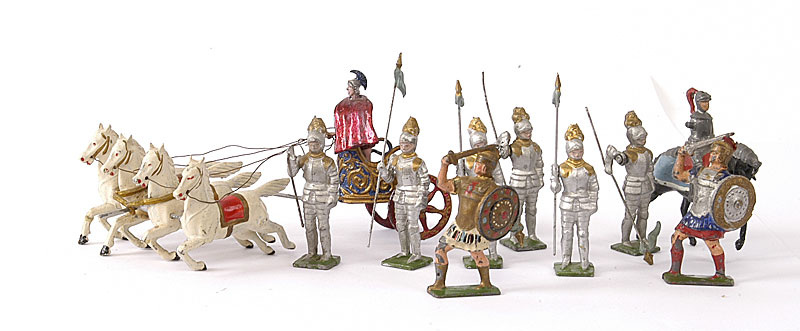
what are these?

taylor and hill(right) at the circus maximus


Chariot races were one of the Roman's most popular form of entertainment. Romulus, the first of Rome's seven kings, is said to have held chariot races.


The origins of the Circus Maximus go back to the 6th century BC when Tarquinius Priscus, the fifth king of Rome, created a track between the Palatine and Aventine hills. The first permanent starting gates were created in 329 BC. In 174 BC the gates were rebuilt and seven wooden eggs were placed on top of the spina, the central wall in the arena. The eggs were used to count the number of laps; after each lap one egg was removed. In 33 BC seven bronze dolphins were added to the spina for the same purpose.
hill


Wooden Structures

A fire in 31 BC, the first of three, destroyed the wooden structure. It was rebuilt by emperor Augustus who also added an imperial box on the palatine hill. A large obelisk from Heliopolis was added to the spina as a decoration. The obelisk can now be found at the center of the Piazza del Popolo. Another obelisk was added much later, in the 4th century.

A second fire, in AD 64, which started in wooden shops at the bottom around the track started the fire that burned much of Rome during the reign of emperor Nero.


Scale model of the Circus Maximus in Ancient Rome (above Benbros)


The Marble Stadium

After yet another fire the Circus was rebuilt by Trajan in AD 103. The Roman empire was at the height of its power and the new Circus Maximus reflected this status. The Circus was now a stone construction, three stories high. The lower part of the cavea (seating area) was built in marble. The arena complex was now more than 600m long and 150m wide (2000x500ft).


Popular Events

The Circus Maximus was occasionally used for events such as processions or gladiator combats, but on most days only chariot races with quadrigaes, pulled by four horses, were held here. The races themselves were wildly popular with people fanatically supporting one of the four factions: red, white, green and blue representing summer, winter, spring and autumn respectively. Bets were laid on one of the factions and supporters of the different factions often clashed, sometimes resulting in deaths among the spectators.


The Last Race

The last race at the Circus Maximus was held in AD 549, almost a millennium after the first races were held at this location. Today only the layout of the original circus can be seen in what is now a large grassland. Most of the original structure has been used as building material for medieval and Renaissance constructions

Saturday, 20 November 2010

ww1 lanc ers

Battle Honours of World War One


The 5th Royal Irish Lancers won a total of 20 battle honours during World War One, they are listed below:


Mons

Le Cateau

Retreat from Mons

Marne 1914

Aisne 1914

Messines 1914

Ypres 1914 '15

Gheluvelt

St. Julien

Bellewaarde

Arras 1917

Scarpe 1917

Cambrai 1917

Somme 1918britains

St. Quentin

Amiens

Hindenburg Line

Canal du Nord

Pursuit to Mons

France and Flanders 1914-18


Battle Honours - How They Were Awarded


The award of battle honours for World War One was decreed by the Army Council and issued under Army Order 338 of 4th September 1922 regarding the rules. The following are extracts from it:


Regiments will have emblazoned on their Standards, Guidons, and Colours not more than 24 Honours of which not more than 10 will be "Great War" honours..."


"The guiding principle in the selection and allotment of battle honours will be that Headquarters and at least 50 per cent of the effective strength of a unit in a theatre of war must have been present."


Regimental Committees under the chairmanship of their regimental colonels will be set up to select the particular honours for Regimental Colours."


Given that many regiments had so many pre-WW1 battle honours, the limitations proved difficult and Army Order 470 was issued on Dec 24 1922 making the process a little easier for the Regimental Committees:


"Regiments of cavalry will have emblazoned on their standards and guidons Battle Honours earned...up to a maximum of 10, in addition to those already carried.."


"Battalions of infantry...will have emblazoned on their King's Colour, Battle Honours up to a maximum of 10, in addition to those already carried."


A number of additions and corrections were ordered up to August 1939.

sick note

hill renault tank

The Renault FT 17 or Automitrailleuse à chenilles Renault FT modèle 1917 was a French light tank; it is among the most revolutionary and influential tank designs in history. The FT 17 was the first tank with an armament in a fully rotating turret, and its configuration with the turret on top, engine in the back and the driver in front became the conventional one, repeated in most tanks until today; at the time it was a revolutionary innovation, causing armour historian Steven Zaloga to describe the type as "the world's first modern tank".


Studies on the production of a new light tank were started in May 1916 by the famous car producer Louis Renault, for no apparent reason other than his wish to involve steel tycoon Paul Thomé in his business schemes. One of his most talented designers, Rodolphe Ernst-Metzmaier, was the actual creator of the modern concept.


Though the project was far more advanced than the two first French tanks about to enter production, the Schneider CA1 and the heavy St. Chamond, Renault had at first great trouble getting it accepted. Even after the first British use of tanks, on 15 September 1916, when the French people called for the deployment of their own chars, the production of the light tank was almost cancelled in favour of that of a superheavy tank (the later Char 2C). Ironically, it was again his own man, Ernst-Metzmaier, who had designed this behemoth when Renault was assisting another firm, FCM. However, with the unwavering support of Brigadier General Jean-Baptiste Eugène Estienne (1860–1936), the "Father of the Tanks", and the successive French Commanders in Chief, who saw light tanks as a more feasible and realistic option, Renault was at last able to proceed with the design. However, competition with the Char 2C was to last until the very end of the war.


The prototype was slowly refined during the first half of 1917. Early production FT 17s were often plagued by radiator fan belt and cooling system problems. Only 84 were produced in 1917 but 2,697 were delivered before the end of the war. At least 3,177 were produced in total, perhaps more; some estimates go as high as 4,000 for all versions combined. However, 3,177 is the delivery total to the French Army; 514 were perhaps directly delivered to the U.S. Army and three to Italy - giving a probable total production number of 3,694. The tanks had at first a round cast turret; later either an octagonal turret or an even later rounded turret of bent steel plate (called Berliet turret after one of the many coproducing factories). The latter two could carry a 37 mm Puteaux gun or a 7.92 mm Hotchkiss machine gun. In the U.S., this tank was built on a licence as the Six Ton Tank Model 1917 (950 built, 64 before the end of the war).


There is a most persistent myth about the name of the tank: "FT" is often supposed to have meant Faible Tonnage, or, even more fanciful: Franchisseur de Tranchées (trench crosser). In reality, every Renault prototype was given a combination code; it just so happened it was the turn of "FT". Another mythical name is "FT-18" for the guntank: this designation has never been found in any contemporary source. Also in "FT 75 BS", the "BS" does not mean Batterie de Support (see below
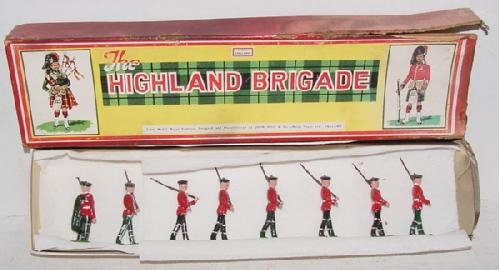
what are these?